

Call us now
08037103897

 Send Inquiry
Autoclaved Aerated Concrete Blocks
MOQ : 1000 Pieces
Autoclaved Aerated Concrete Blocks Specification
- Carbonation Coefficient
- Low
- Frost Resistance
- Excellent
- Moisture Content
- 8-12%
- Porosity
- High
- Cavity
- Solid
- Method
- Autoclaving
- Thickness
- 75-300 mm
- Compressive Strength
- 3-4.5 N/mm2
- Dry Density Grade
- 550-650 kg/m3
- Width
- 200 mm
- Density
- 550 Gram per cubic centimeter(g/cm3)
- Type
- Autoclaved Aerated Concrete (AAC) Block
- Drying Shrinkage
- 0.04%
- Color
- Light Grey
- Usage & Applications
- Internal & external walls, partition walls, infill panels, thermal and acoustic insulation walls
- Thermal Conductivity
- 0.16-0.18 W/mK
- Water Absorption
- Less than 10%
- Material
- Other
- Length
- 600 mm
- Strength
- Superior to Standard Bricks
- Oftening Coefficient
- 0.88
- Size
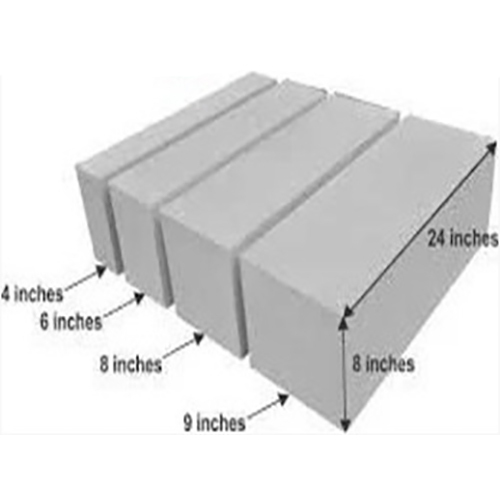
- 600 x 200 x (75 to 300) mm
- Weight
- 8-15 kg (Depending on size)
- Shape
- Rectangular
- Eco Friendly
- Yes, made from non-toxic and recycled materials
- Edge Profile
- Tongue and Groove (optional)
- Workability
- Easy to cut, drill, and shape
- Packing Type
- Shrink-wrapped on wooden pallets
- Pest Resistant
- Termite and pest resistant
- Finish
- Smooth
- Sound Insulation
- 37-42 dB
- Surface Hardness
- Medium
- Fire Resistance
- Up to 4 hours
- IS Standard
- IS 2185 (Part 3): 1984
Autoclaved Aerated Concrete Blocks Trade Information
- Minimum Order Quantity
- 1000 Pieces
- Payment Terms
- Cash in Advance (CID)
- Supply Ability
- 5000 Pieces Per Month
- Delivery Time
- 2-10 Days
- Main Domestic Market
- All India
About Autoclaved Aerated Concrete Blocks
Buy exclusive Autoclaved Aerated Concrete Blocks , a hot-selling solution engineered for sublime performance and unrivaled safety. Each block boasts up to 4 hours fire resistance, outstanding sound insulation (37-42 dB), and eco-friendly construction from non-toxic, recycled materials. Designed for enlightened builders, these blocks offer effortless workability, a smooth finish, and optional tongue and groove edges. Certified under IS 2185 (Part 3): 1984, AAC Blocks resist pests, frost, and moisture, ensuring superior durability. Their medium surface hardness, high porosity, exceptional compressive strength, and thermal efficiency outperform standard bricks. Experience the difference in every project-order now from India's top suppliers, traders, and wholesalers!
Autoclaved Aerated Concrete Blocks : Versatile Applications for Modern Construction
Autoclaved Aerated Concrete Blocks are particularly suitable for internal and external walls, partition walls, infill panels, and both thermal and acoustic insulation walls. Their solid, rectangular form and high durability make them a preferred choice for residential, commercial, and industrial projects. Frequently used by architects, contractors, and builders, these blocks cater to diverse construction needs, delivering both strength and efficiency across various building types. Their adaptability ensures they meet the demands of contemporary building practices in India.
Packaging, Supply Capacity, and Swift Delivery of AAC Blocks
Our Autoclaved Aerated Concrete Blocks are securely shrink-wrapped on sturdy wooden pallets, ensuring safe shipped goods and minimal damage during transport. With strong supply ability, we smoothly handle bulk and small-scale orders for traders and wholesalers. Order processing is streamlined for rapid fulfillment, and delivery times are optimized for reliable arrival at your location. We maintain strong logistics to ensure every batch of AAC Blocks meets your schedule and quality expectations for seamless project management.
Autoclaved Aerated Concrete Blocks : Versatile Applications for Modern Construction
Autoclaved Aerated Concrete Blocks are particularly suitable for internal and external walls, partition walls, infill panels, and both thermal and acoustic insulation walls. Their solid, rectangular form and high durability make them a preferred choice for residential, commercial, and industrial projects. Frequently used by architects, contractors, and builders, these blocks cater to diverse construction needs, delivering both strength and efficiency across various building types. Their adaptability ensures they meet the demands of contemporary building practices in India.
Packaging, Supply Capacity, and Swift Delivery of AAC Blocks
Our Autoclaved Aerated Concrete Blocks are securely shrink-wrapped on sturdy wooden pallets, ensuring safe shipped goods and minimal damage during transport. With strong supply ability, we smoothly handle bulk and small-scale orders for traders and wholesalers. Order processing is streamlined for rapid fulfillment, and delivery times are optimized for reliable arrival at your location. We maintain strong logistics to ensure every batch of AAC Blocks meets your schedule and quality expectations for seamless project management.
FAQ's of Autoclaved Aerated Concrete Blocks :
Q: How do Autoclaved Aerated Concrete Blocks improve fire and sound resistance in buildings?
A: AAC Blocks provide up to 4 hours of fire resistance and sound insulation between 37 and 42 dB, delivering enhanced safety and quieter indoor environments. Their cellular structure aids in thermal and acoustic efficiency, making them an excellent choice for modern construction.Q: What materials are used in the manufacturing process of Autoclaved Aerated Concrete Blocks ?
A: AAC Blocks are manufactured using a blend of fly ash or sand, cement, lime, gypsum, and aluminum powder. These non-toxic, recycled ingredients are autoclaved, resulting in lightweight, high-performing building blocks.Q: When should I choose Autoclaved Aerated Concrete Blocks for my building project?
A: AAC Blocks are ideal for both new builds and renovations requiring superior fire resistance, energy efficiency, pest control, and ease of installation. They are perfectly suited for internal and external walls, partitions, infill applications, and thermal or acoustic insulation walls.Q: Where are Autoclaved Aerated Concrete Blocks commonly used and by whom?
A: Autoclaved Aerated Concrete Blocks are widely used in residential, commercial, institutional, and industrial construction. They are frequently chosen by architects, developers, and contractors aiming for sustainable, high-quality, and cost-effective building solutions.Q: What is the process for ordering and receiving Autoclaved Aerated Concrete Blocks in India?
A: Place your order with our verified suppliers, traders, or wholesalers. After order processing, AAC Blocks are shrink-wrapped on wooden pallets, shipped promptly, and arrive at your designated location, backed by efficient delivery schedules to meet your project timelines.Q: What are the primary benefits of using Autoclaved Aerated Concrete Blocks over standard bricks?
A:Autoclaved Aerated Concrete Blocks offer superior strength, termite and pest resistance, lower moisture absorption, higher thermal insulation, and lighter weight than traditional bricks. This results in faster construction, enhanced building safety, and long-term cost savings.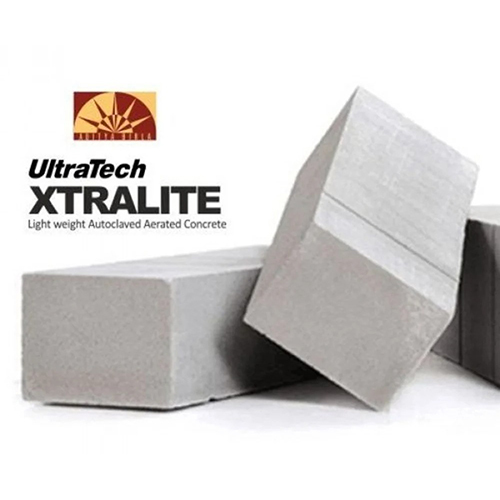
Tell us about your requirement

Price:
Quantity
Select Unit
- 50
- 100
- 200
- 250
- 500
- 1000+
Additional detail
Mobile number
Email


BHANDARI STONE CUTTING AND POLISHING
Nanded, Maharashtra, India
Nanded, Maharashtra, India
Plot No D-101, Midc,Nanded - 431603, Maharashtra, India
Phone :08037103897
 Send Inquiry
 Send Inquiry
 Send SMS
 Call Me Free
BHANDARI STONE CUTTING AND POLISHING
All Rights Reserved.(Terms of Use)
Developed and Managed by Infocom Network Private Limited.
Developed and Managed by Infocom Network Private Limited.

